Psychiatry & Mental Health

TMS Therapy for Depression in Medical Lake

TMS Therapy is an FDA-cleared, non-invasive treatment for adults with major depressive disorder who have not achieved satisfactory improvement from previous antidepressant medication. It is delivered here in our Medical Lake office — no surgery, no sedation, no downtime.

● VA · Cigna/Evernorth · Premera BCBS ● In-Person Treatments ● Medical Lake, WA

TMS may be worth asking about if

✓ Antidepressant medication has not brought enough relief
✓ You would rather avoid medication side effects
✓ Treatment-resistant depression
✓ Depression with co-occurring anxiety
✓ Adolescents aged 15–21, as an adjunct
✓ Veterans & First Responders
✓ Covered through VA, Cigna/Evernorth & Premera Blue Cross
✓ No surgery, no sedation, no downtime

Our approach

Depression Treatment Without Medication

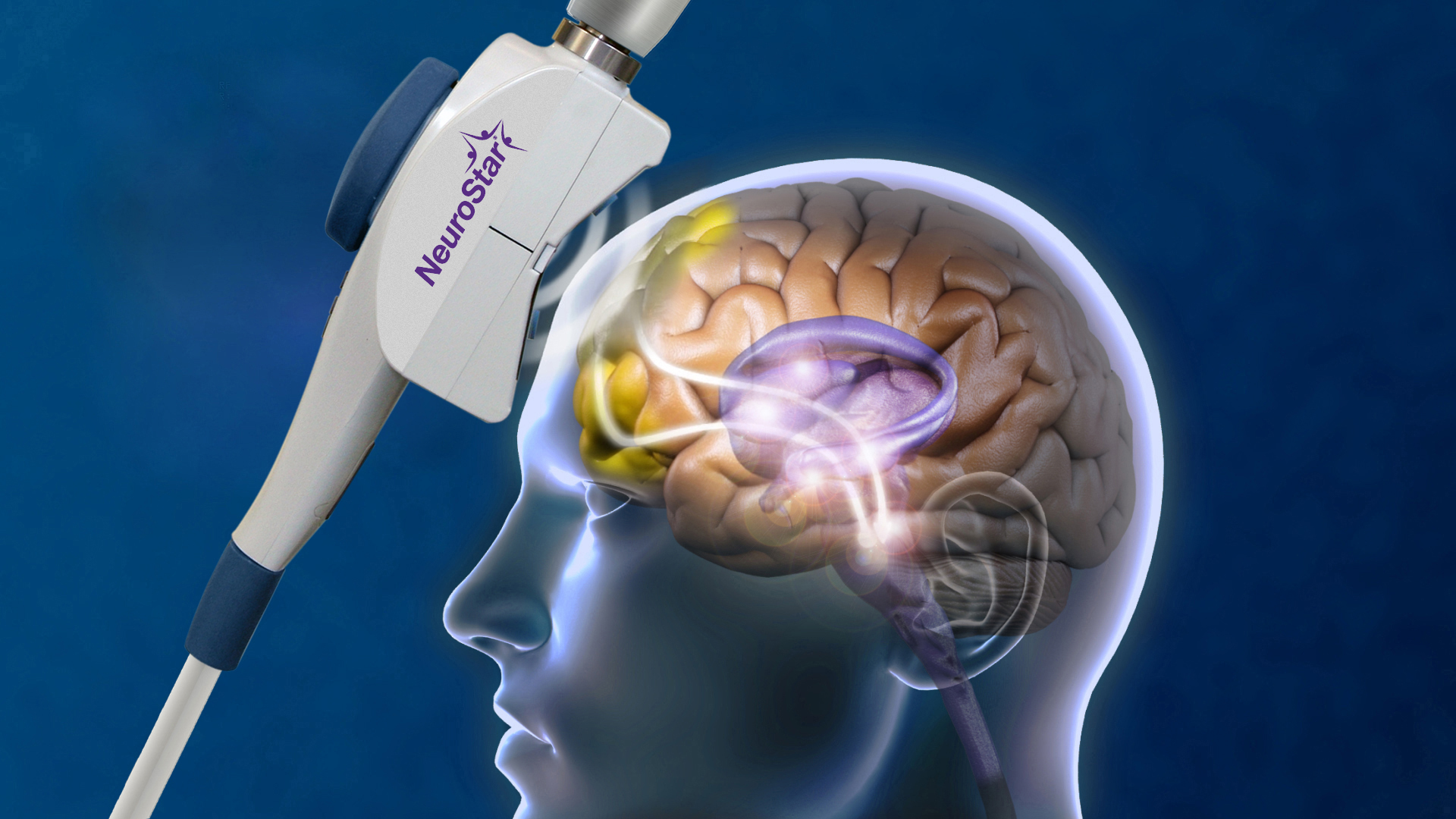
At Essential Psychiatry in Medical Lake, we provide Transcranial Magnetic Stimulation (TMS) therapy. NeuroStar TMS is FDA-cleared for adults with major depressive disorder who have not achieved satisfactory improvement from previous antidepressant medication in the current episode. TMS uses repetitive magnetic pulses directed at an area of the brain involved in regulating mood — without medication, surgery, or sedation.

FDA-Cleared for Depression

NeuroStar TMS is FDA-cleared for adults with major depressive disorder. In a real-world registry study of 5,010 patients, 83% experienced a measurable improvement in symptoms and 62% achieved remission (Sackeim et al., 2020). For TMS we currently accept coverage through the VA, Cigna/Evernorth, and Premera Blue Cross. We verify your benefits before treatment begins.

Non-Invasive & Comfortable

No surgery. No anesthesia. No electrodes. An electromagnetic coil is applied to the forehead close to the scalp and delivers a magnetic pulse — you remain awake and seated throughout. The most common side effects are temporary headache and discomfort at or near the treatment site; these are generally mild to moderate and diminish substantially after the first week (Janicak et al., 2008). Most patients return to normal activities immediately after each session.

What a Course Looks Like

TMS is administered five days a week for six to nine weeks. We use a theta-burst protocol, a shorter form of TMS delivery, so each appointment takes less chair time than conventional TMS. In a multisite study of patients with treatment-resistant depression, two out of three maintained the benefit of treatment over twelve months of follow-up (Dunner et al., 2014).

Your questions answered

Everything You Need to Know About TMS

What is TMS Therapy?
TMS therapy delivers repetitive magnetic pulses to the brain — also known as rTMS (repetitive Transcranial Magnetic Stimulation). It is a non-invasive, outpatient procedure that requires no medication and no recovery time.
How does it work?
An electromagnetic coil is applied to the forehead close to the scalp and delivers a painless magnetic pulse. This stimulates the nerve cells in the area of the brain which controls mood and depression. The stimulation activates regions with depressed neural activity, which decreases symptoms of depression and promotes a more positive mood.
Is it safe?
TMS is non-invasive — no surgery, no electrodes, no sedation required. The most common side effects are temporary headache and scalp discomfort at or near the treatment site. These are generally mild to moderate and diminish substantially after the first week (Janicak et al., 2008). Seizure is a rare risk: a survey of more than half a million treatment sessions recorded 0.03 seizures per 10,000 sessions (Taylor et al., 2021), and NeuroStar states the risk as fewer than 0.1% per patient. Hearing protection is used during every session. Patients with bipolar disorder may experience mania — please discuss your full history with our team prior to treatment.
Who is TMS for?
NeuroStar TMS is FDA-cleared for adults with major depressive disorder who have not achieved satisfactory improvement from previous antidepressant medication in the current episode, and for decreasing anxiety symptoms in adults with depression and co-occurring anxiety. It is also FDA-cleared as an adjunct treatment for adolescents aged 15 to 21 with major depressive disorder (FDA clearance K231926). Many of the people we treat are veterans and first responders. Whether TMS is appropriate for you is a decision made with a provider after a full evaluation.
TMS Therapy NeuroStar Essential Psychiatry Medical Lake

What to expect during treatment

✓ Comprehensive evaluation to confirm TMS is right for you
✓ Five sessions a week for six to nine weeks
✓ Each session is a short outpatient appointment
✓ Awake and seated — no recovery time needed
✓ Return to normal activities immediately after
✓ Two out of three patients maintained benefit over 12 months (Dunner et al., 2014)

Therapy session Essential Psychiatry Medical Lake
Patient consultation at Essential Psychiatry, Medical Lake

Watch & learn

See TMS Therapy in action

Watch this short video to learn more about how TMS therapy works and what to expect during treatment.

Why choose us

Why Choose Essential Psychiatry for TMS Therapy?

Essential Psychiatry is an independent psychiatric practice sharing a building with Essential Health Group in Medical Lake. If your care needs both, you will not have to drive anywhere. Our psychiatric team is led by Dr. Candie Wellwood, DNP, PMHNP, a retired USAF Staff Sergeant, specializing in depression, PTSD, and complex mood disorders. We are a VA preferred provider — veterans need only a referral to access TMS therapy. TMS coverage is currently accepted through the VA, Cigna/Evernorth, and Premera Blue Cross; we verify your benefits and handle prior authorization before treatment begins. Self-pay is available, with a discount for payment in full up front. Call for current pricing; a Good Faith Estimate is provided in writing.

Important Safety Information

NeuroStar Advanced Therapy is only available by prescription. A doctor can help decide if NeuroStar Advanced Therapy is right for you. Patients’ results may vary. The most common side effect is pain or discomfort at or near the treatment site. These events are transient; they occur during the TMS treatment course and do not occur for most patients after the first week of treatment. There is a rare risk of seizure associated with the use of TMS therapy (<0.1% per patient). Visit neurostar.com for full safety and prescribing information.

Clinical figures cited on this page: Sackeim et al., 2020 (real-world registry, n=5,010); Dunner et al., 2014 (12-month durability); Janicak et al., 2008 (adverse events); Taylor et al., 2021 (seizure incidence). Source: NeuroStar Clinical Publications, document 53-55440-000 Rev B.

Ready to Try a Better Way Forward?

We understand how hard it can be to ask for help. Whether it is for yourself or for someone in your family, we are here. If medication has not brought enough relief, TMS is worth a conversation.

Medical Lake, WA · (509) 299-6900 · In-Person Treatments Available